
From Drones to Robot Dogs: how Robotics and Autonomous Systems (RAS) are transforming modern operations
Robotics and Autonomous Systems (RAS), meaning UAVs (Unmanned Aerial Vehicles) commonly known as drones, robot dogs, and everything in between, are quickly becoming irreplaceable tools across various industries. From disaster relief to infrastructure monitoring and even wildlife conservation, these technologies are reshaping the way we approach safety, efficiency, and responsiveness.
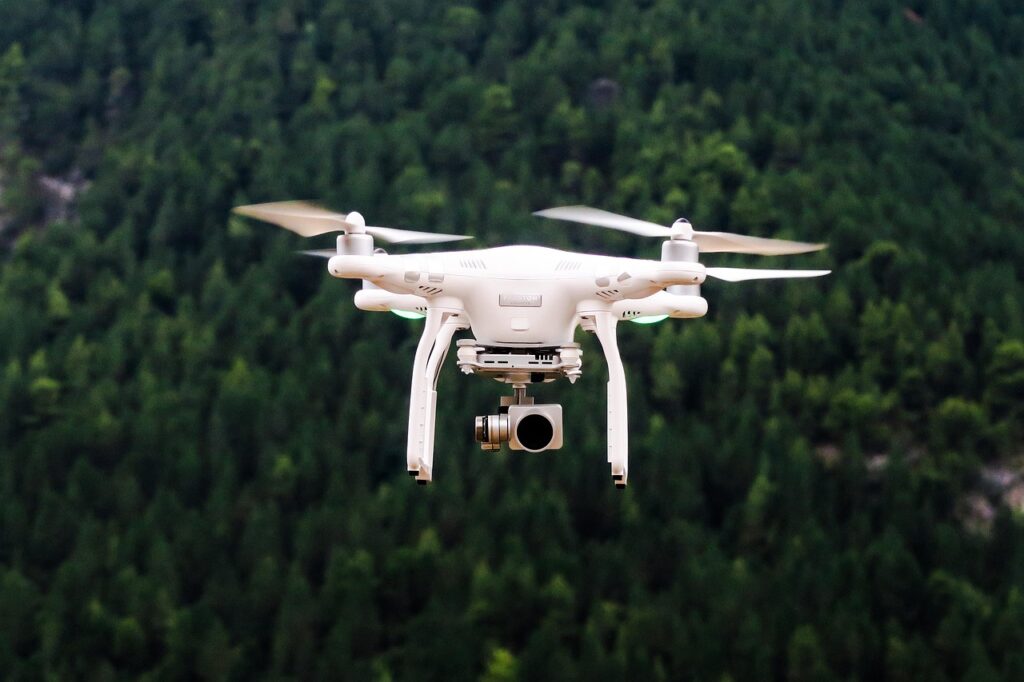
A QUICK LOOK AT RAS EVOLUTION
The early 2000s saw huge technological advances join the markets. In fact drones entered the commercial and government space as surveillance tools. Initially, they were mostly used in military and law enforcement operations for their capacity of quickly communicating data back and mapping out situations. In the US, the use of the tech by officials became common with programs like the NYPD’s “Drones as First Responders” launching in 2018 to analyse situations before sending in officers. These models initially limited in range and capacity already showed a taste of the tech’s potential.
A potential fulfilled, with the quick advances in AI, navigation systems, and sensors. Drones are now faster, more precise, and increasingly autonomous. They are capable of flying long distances (e.g. 200 km for the Falcon 35), collecting data in real-time, and adapting to unpredictable conditions (high altitudes, weather changes).
Another useful RAS that made headlines back in the early 2010s are what we now call robotic “dogs”. Their practical use far less talked about then that of their cousins the UAVs but just as interesting. Where the UAVs provide overhead surveillance, the “dogs” master exploring the terrain on the surface. By 2020, companies like Boston Dynamics and others were trialling terrain-navigating robotic units for hazardous site inspections, search and rescue, and infrastructure monitoring. They prove particularly useful in disaster zones and industrial inspections for their ability to traverse debris, rough surfaces, and confined spaces that may be unsafe or inaccessible for us.
RAS has now become an ecosystem of machines that reshape fieldwork across sectors different sectors and go far beyond simple surveillance. An ecosystem that has in the recent year became available to both public and private entities.
MEET RAS, YOUR NEW FAVOURITE COLLEAGUES.
The versatility of the systems makes them strong candidates for any organization looking to modernize and make their operations more efficient. Whether you’re monitoring a large event, delivering medical supplies to a remote area, or inspecting solar panels in the desert, RAS technology steps in with speed, precision, and cost-efficiency.
Let’s take a look at what they can do for you specifically:
- Disaster response
UAVs provide critical real-time data in emergencies. For instance, heat-resistant drones can scan wildfires while tethered models offer continuous aerial views in flood zones or hurricane-hit regions. In some cases, UAVs can team up with robot “dogs” to navigate unstable terrain and even locate survivors. A great example of this happened in 2023, when a parking garage collapsed in Lower Manhattan. The New York City Fire Department deployed drones, and a robotic dog named Digidog to assess the damage. While the drones provided aerial visuals, Digidog ventured into the unstable structure, streaming real-time video and thermal imagery to help identify any survivors, all without putting human responders at risk.
- Infrastructure monitoring
Are you in need of inspecting miles of pipeline or a remote wind farm? RAS systems make it possible with minimal human intervention. With AI-powered data analysis and thermal imaging, issues can be spotted and addressed before they become major disruptions.
- Humanitarian aid
In crisis zones, drones can carry supplies like water, food, or medicine to areas otherwise cut off from assistance. They’ve also been used to monitor population movements in refugee camps to improve safety and resource planning. For example, in South Sudan, drones have been deployed by humanitarian organizations to survey internally displaced persons (IDP) camps, helping aid groups identify overcrowded zones, plan sanitation logistics, and safely coordinate the delivery of essential supplies.
- Events and public safety
During a 2021 Guns N’ Roses concert in Montana, a tethered drone kept watch over a crowd of 14,000 attendees, operating continuously for over six hours. The result? Efficient crowd management with far fewer security staff than traditionally needed. In fact, achieving similar coverage with traditional manpower would have required an estimated 10 to 15 security personnel stationed strategically around the event space to ensure the same level of surveillance and responsiveness.
- Environmental & wildlife monitoring
Drones can fly over remote ecosystems to track endangered species, monitor deforestation, or detect illegal activity like poaching. For example, they were used to effectively track whale populations in the open ocean, the state of Muriquis monkeys in Brazil, or collecting incriminatory data against illegal loggers in the Amazon forest.
THINKING OF OWNING ONE (OR MORE)? HERE’S WHAT YOU SHOULD CHECK.
UAVs and robotic “dogs” are truly powerful tools, but they’re also highly regulated. Whether you or your company are planning on making full use of them, you’ll need to ensure full compliance with local laws and operational standards. Since there’s no global legal framework yet, regulations vary by region. Here’s a brief overview:
- South America– Drone regulations vary widely by country. For example in Brazil, the National Civil Aviation Agency (ANAC) requires drone registration for certain models and a special license for commercial operations. Flights over people or beyond visual line of sight are heavily restricted. In the Dominican Republic certain models depending on weight (superior to 4.4 pounds) must be registered with the Dominican Institute of Civil Aviation (IDAC), and operators are required to have liability insurance and comply with no-fly zones and visual line-of-sight restrictions.
- United States: The Federal Aviation Administration (FAA) requires commercial drone operators to obtain a Remote Pilot Certificate. Operators must pass an aeronautical knowledge test and register their drones. Flights over people, at night, or in restricted airspace require waivers.
- European Union: The European Union Aviation Safety Agency (EASA) classifies drones into Open, Specific, and Certified categories. Operators must register, pass online training, and comply with restrictions based on drone weight and use. Operations near people or in urban areas typically fall into the Specific category and require an operational risk assessment.
- United Kingdom: The Civil Aviation Authority (CAA) mandates that drones over 250 grams be registered, and their operators pass an online theory test. Commercial use may require an Operational Authorisation under the UKPDRA01 framework.
- Middle East & Africa: The framework across this region varies greatly with the UAE at the head of it with some of the most structured drone laws, including registration through the GCAA and strict no-fly zones. Commercial operators must obtain permits and comply with operational limitations. In other countries like South Africa for instance, drone use is regulated by the South African Civil Aviation Authority (SACAA) under Part 101. Certain countries such as Libya drone regulations are for now still virtually non-existent.
As for robotic dogs, there are no specific organisms or regulations, it is necessary to check each country and their data protection regulations, public safety laws and operational norms.
To avoid heavy fines it is primordial to consult each countries regulations before considering operating.
WHAT WE SEE COMING:
As with all fast-moving tech, regulation is catching up. Here’s what we anticipate:
Tighter data protection regulations
The more data RAS collect, the more scrutiny there’ll be on storage, encryption, and sharing, especially under GDPR or equivalent laws. It is expected that compliance and control over such data processes will significantly tighten.
Towards global standards Unified international rules would simplify operations for multinational firms. It’s a change we’re watching closely and hoping for. While there is no single global law governing the use of Robotics and Autonomous Systems (RAS), efforts are underway to build international alignment:
- International Civil Aviation Organization (ICAO) is working on frameworks for Remotely Piloted Aircraft Systems (RPAS), aimed at helping countries to harmonize their drone regulations and manage international airspace use.
- JARUS(Joint Authorities for Rulemaking on Unmanned Systems) brings together aviation experts from around the world to draft common technical, safety, and operational guidelines.
- For broader robotics and AI applications,ISO (International Organization for Standardization) has released standards like ISO 13482 for personal robots and ISO/IEC 23894 for AI risk management, laying the groundwork for safe and ethical RAS deployment across industries.
These initiatives aren’t binding, but they’re shaping the way national laws are written and paving the way toward eventual global coherence in RAS regulation.
HOW WE CAN HELP
Whether you’re a private security firm, an event planner, or an NGO, integrating RAS into your operations means dealing with complex rules, tech specs, and ethical considerations.
We can help monitor the evolving regulatory landscape and help you stay compliant across regions, assess your operations for any legal or operational risks before deployment and help you implement RAS with minimal disruption.
At ATI, we believe innovation should be both exciting and accessible. Whether you’re trying to streamline your logistics, respond faster to crises, or explore new surveillance options, we’re here to help you integrate robotics and autonomous systems seamlessly.
Let us help you future proof your operations.